Ein Gebäude an sich kann nicht regenerativ sein
Was heißt regenerativ? Die Architektin von Hedeskov, Justine Bell, über die Stärkung zwischen Landschaft und Architektur, die Lesbarkeit des Ortes, Stadt versus Land, Luxus, Skalierbarkeit und Einschränkung.
Text: Bruun Yde, Marie, Berlin
Ihr Büro konzentriert sich auf Reparatur, Restaurierung und lebensfördernde Transformation. Wie definieren Sie regeneratives Bauen?
Ein Gebäude an sich kann nicht regenerativ sein –entscheidend sind Prozesse und Arbeitsweisen. In unserer Praxis beginnen wir mit Reparatur als notwendigem Schritt, geprägt von unserer Arbeit im Bestand. Regeneration bedeutet Verbesserung über Zeit durch kontinuierliches Handeln, eine Ko-Evolution innerhalb eines größeren Systems, nicht die Eigenschaft eines einzelnen Objekts. Der Begriff stammt aus Ökologie und Landwirtschaft und beschreibt Systeme, die ihre eigenen Bedingungen stärken. Für die Architektur verschiebt sich der Fokus damit vom Gebäude auf die Beziehungen, in die es eingebunden ist: Materialflüsse, Wissenszirkulationen und Nutzungen. Regeneration ist weniger ein Label als eine Arbeitsweise im Umgang mit Systemen.
Die Idee geht über die bloße Reduktion von Schä- den hinaus und zielt darauf ab, Ressourcen aktiv wiederherzustellen und ökologische Systeme zu verbessern. Wie setzen Sie diesen Ansatz in Hedeskov um?
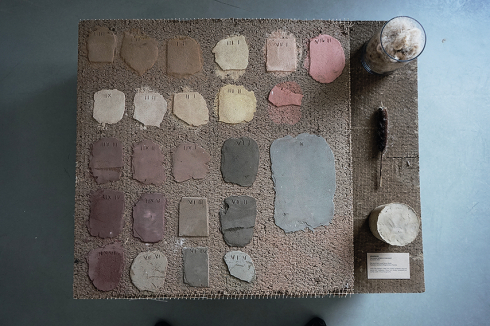
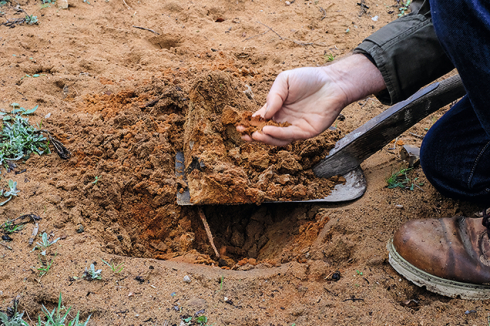
Wir haben mit klaren Prinzipien gearbeitet: Erhalt statt Ersatz, lokale Materialien, geringe CO₂-Belastung und der Verzicht auf chemisch intensive Produkte. Ziel war es, vorhandene Qualitäten zu verbessern und die Beziehung zwischen Gebäude und Landschaft zu stärken. Ein zentrales Werkzeug war die bioregionale Kartierung: Neben Ressourcen untersuchten wir Bodenverhältnisse, ehemalige Wasserläufe und geologische Prozesse. So lässt sich verstehen, was eine Landschaft tragen kann. In der Umsetzung bedeutete das, möglichst viel zu erhalten, Materialien vor Ort wiederzuverwenden und nur dort zu ergänzen, wo es notwendig war. Leitend war die Frage, was bleiben kann, was entfernt werden muss und was sich ohne weitere Verarbeitung wiederverwenden lässt.
Sie arbeiten auch daran, bestehende soziale Strukturen zu erhalten und zu stärken.
Das Projekt war stark durch Beziehungen geprägt. Wir haben offen und schrittweise gearbeitet, Entscheidungen im Dialog getroffen. Herausforderungen wurden so zu Ausgangspunkten für bessere Lösungen. Die Bauherrschaft spielte eine zentrale Rolle, war vor Ort präsent, beschaff- te Materialien und brachte eigenes Wissen ein. Regenerative Architektur ist damit weniger eine Frage der Form als der Gestaltung von Beziehungen zwischen Menschen, Materialien und Landschaft über die Zeit.
Wenn Sie Hedeskov als Erweiterung der Landschaft beschreiben, meinen Sie damit eine Art Symbiose zwischen Natur und Architektur?
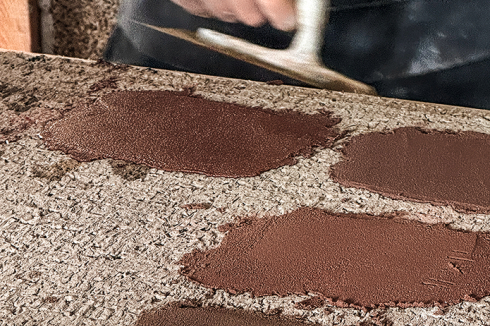
Wir verstehen das relational: Entwerfen kann die Bedingungen eines Ortes lesbar machen und Materialien, Gebäude und Landschaft verbinden. Das knüpft an vernakuläres Bauen an, bei dem Herkunft und Einbindung der Materialien sichtbar sind. In Hedeskov haben wir das in einen zeitgenössischen Kontext übersetzt, indem wir Materialien so eingesetzt haben, dass ihre Herkunft erkennbar bleibt – Erde, Lehm und pflanz-liche Fasern. In den älteren Teilen sind wir zurückhaltend vorgegangen und haben Eingriffe wie runde Fenster gemacht. In heruntergekommenere Bereichen haben wir stärker interveniert und größere Öffnungen geschaffen.
Hedeskov hat eine sehr artikulierte, fast luxuriöse Atmosphäre. Wie sehen Sie die Rolle solcher Leuchtturmprojekte?
Den Begriff „Luxus“ finden wir irreführend, da er hohe Kosten suggeriert. Das Projekt ist klein, basiert auf einem typischen dänischen Ziegelbau und liegt im durchschnittlichen Kostenrahmen. Die Materialien wirken hochwertig, sind aber nicht teurer als industrielle Produkte – viele stammen aus dem Bestand oder der Umgebung. Was als „luxuriös“ wahrgenommen wird, ist die räumliche Erfahrung. Diese war intendiert: Wir wollten das Bauen mit natürlichen Materialien aus der „shabby chic“- und Ökokollektiv-Ecke lösen und in eine breitere architektonische Sprache überführen.
Aber lässt sich ein solches Modellprojekt skalieren?
Skalierbar ist die Arbeitsweise, nicht das einzelne Projekt. Die Herausforderung liegt im Zugang zu größeren Bauaufgaben, insbesondere im Wohnungsbau. Im Bestand liegt enormes Potenzial, doch Sanierung wird oft als Instandhaltung verstanden und nicht als architektonische Aufga-be. Dieses Potenzial zu erschließen, ist entscheidend für die Verbreitung solcher Methoden.
Regenerative Projekte konzentrieren sich im ländlichen Raum. Deutet dies auf eine tiefere Kluft zwischen ländlicher und urbaner Praxis hin – und auf eine Schwierigkeit, sich mit den Realitäten der Stadt auseinanderzusetzen?
Der Ansatz ist in Städten sehr gut anwendbar, vielleicht sogar mehr als im ländlichen Kontext. Materialien im urbanen Raum sind oft mehrfach verarbeitet, aber nicht weniger wertvoll. Entscheidend ist, das Vorhandene zu verstehen – Materialien, Fähigkeiten und Produktionskapazitäten – und damit zu arbeiten. Industrielle Prozesse können dabei ein Vorteil sein, etwa bei der Entwicklung von recycelten Materialien. Mehrwert entsteht dort, wo Architektinnen und Handwerker vorhandene Materialien weiterverarbeiten und diese Prozesse sichtbar machen.
Was Sie beschreiben, klingt fast hoffnungsvoll, insbesondere zu einer Zeit, in der viele Städte immer homogener werden und ihre Identität verlieren. Sehen Sie regenerative Ansätze als Chance, mehr Spezifität zurückzubringen?
Viele Menschen wünschen sich eine Zukunft, die nicht nur weniger schädlich, sondern besser ist als die Gegenwart. Es geht nicht um Romantisierung, sondern um Kulturen, die respektvoller mit Leben umgehen. Das würde auch unsere Arbeitsweise verändern: weniger produzieren, mehr erhalten und reparieren. Architektur würde so zu einer Form der Fürsorge. Städte könnten spezifischer werden, stärker im Kontext verankert und durch Pflege statt durch ständigen Ersatz geprägt.
Welche Herausforderungen begegnen Ihnen bei der Anwendung regenerativer Ansätze in der aktuellen architektonischen Praxis?
Lange galt dieser Ansatz als nachrangig, besonders in Dänemark mit der Trennung zwischen Denkmalpflege und Neubau. Transformation als Entwurfsmethode war kaum präsent. Der Fokus auf das „bereits Vorhandene“ war zunächst fast provokant. Eine zentrale Hürde ist disziplinär: Architektur stützt sich stark auf technische Expertise, während ökologische Kenntnisse oft nur begrenzt integriert sind. Der Wandel vollzieht sich jedoch schnell.
Sie sind in Südafrika aufgewachsen. Wie hat Ihr Hintergrund dort Ihre Arbeit beeinflusst?
Die Ausbildung dort legt großen Wert auf räumliche Gerechtigkeit und den Umgang mit ungleichen gebauten Umwelten. Fragen der Reparatur sind entsprechend präsent. Der Umgang mit wiederverwendeten Materialien ist keine Option, sondern Notwendigkeit. Daraus entsteht eine Form von Erfindungsreichtum, bei der Innovation aus Einschränkung hervorgeht. Zugleich gibt es eine lange Tradition des Bauens mit natürlichen Materialien wie Lehm oder Schilf. Diese Erfahrungen prägen unsere Arbeit bis heute.
In der jüngsten politischen Debatte in Dänemark hat sich der Fokus von abstrakten Klimazielen auf greifbarere Themen wie sauberes Wasser und Tierschutz verschoben. Sehen Sie darin eine Chance für die Architektur, angesichts ihres erfahrungsbezogenen Charakters?
Architektur kann komplexe Themen erfahrbar machen. Die Herausforderung liegt in der Umsetzung. Vergabesysteme und risikoscheue Auftraggeber begünstigen weiterhin standardisierte Lösungen. Es braucht mehr Vielfalt, insbesondere bei öffentlichen Projekten. Kommunen spielen dabei eine Schlüsselrolle, da sie Themen wie Wasser, Material oder ökologische Systeme im Alltag sichtbar machen können.
Dänemark gilt als Vorreiter im Bereich der erneuerbaren Energien. Warum hinkt die Architektur hinterher?
Erneuerbare Energien wurden durch Subventionen wirtschaftlich attraktiv. Eine vergleichbare Transformation braucht es im Bauen. Derzeit sind extraktive Materialien oft die naheliegend-ste Option. Es braucht stärkere Anreize, Förderinstrumente und Risikofonds, um nachhaltigere Materialien zugänglich zu machen. Gleichzeitig darf Nachhaltigkeit nicht auf CO₂ reduziert werden, ein reiner Fokus auf Emissionen greift zu kurz und wird der Komplexität ökologischerSysteme nicht gerecht.
***
A building in itself cannot be regenerative
What does regenerative mean? The architect of Hedeskov, Justine Bell, on strengthening the relationship between landscape and architecture, the legibility of place, city versus countryside, luxury, scalability, and constraint.
Your office, Djernes & Bell, focuses on repair, restoration and life-supporting transformation. How do you define regenerative building?
A building in itself cannot be regenerative. It is the processes and ways of working that matter. In our practice, we begin with repair as a necessary step, drawing on a background in transformation and heritage and working with existing structures in London. Regeneration implies improvement over time through ongoing action, a kind of co-evolution within a larger system rather than a quality of a single object. The term comes from fields like ecology and agriculture, where it describes systems that strengthen their own conditions. For architecture, this shifts the focus away from the individual building to the relationships it is part of — flows of materials, knowledge, and use over time. In that sense, regeneration is less a label for an object than a way of working with systems and connections.
How does the idea of going beyond reducing or neutralising negative impacts to create buildings and processes that actively restore resources and improve ecological systems apply to your work at Hedeskov?
We began with a set of principles: preservation over replacement, local materials, low carbon impact, and avoiding chemically intensive products. The aim was not just to maintain existing qualities, but to improve them and strengthen the relationship between building and landscape. A key tool was bioregional mapping. We studied not only available resources, but also soil conditions, former waterways, and long-term geological processes. This helps to understand what a landscape can support and how it has evolved. In practice, this meant preserving as much as possible, reusing materials on site, and adding new elements only where necessary, ideally sourced locally. We continuously asked what could remain, what had to be removed, and what could be reused without further processing.
You also work to preserve and enhance existing social structures.
The project was structured around the relationships between the people involved. We worked in an open, iterative way, with decisions made through continuous dialogue. This meant that challenges did not become conflicts but opportunities for better solutions. The client played a central role, working on site, sourcing materials, and contributing knowledge from agriculture and the life sciences. This level of involvement was formative. In that sense, regenerative architecture is less about form and more about how relationships between people, materials, and landscape are shaped over time.
When you describe Hedeskov as an extension of the landscape, do you mean a kind of symbiosis between nature, construction, and infrastructure?
We mean it in a relational sense: that design can make the conditions of a place legible and connect materials, building, and landscape. This relates to vernacular building, where you can directly see where materials come from and how they are tied to their surroundings. What interests us is this sense of proximity and the ability to read the landscape through architecture. At Hedeskov, we tried to translate that into a contemporary context. We worked with materials in a way that reveal their origins, using earth, clay, and plant fibres so that the building reflects both the ecological and geological conditions of the site. In the older parts, we worked more conservatively but introduced precise elements, like round windows, that frame views of the landscape. In other areas, where the structure was in poorer condition, we intervened more strongly, opening up larger views through doors and sliding elements.
Hedeskov has a very refined, almost luxurious atmosphere. How do you see the role of such flagship projects?
We find the label of “luxury” misleading, as it suggests high costs, which isn’t the case. The project is relatively small, based on a typical early 20th-century Danish brick building, and the square meter cost is average. The materials feel, smell, and look good, but they are not more expensive than industrial ones. Some are even cheaper, and many were sourced directly from the existing building, the landscape, or nearby sites. While the clients do have financial means, that is not what defines the architecture. Our fee, including research and coordination, was actually lower than on a standard project. What might read as “luxury” is the interior experience, and that was intentional. We wanted to move natural building beyond its usual eco collective, straw bale or shabby chic aesthetic and show that it can operate within a broader architectural language.
How does the project relate to questions of broader applicability in architecture?
What scales is the way of working. The challenge is not the approach itself, but access to projects. To really scale, it needs to be tested in larger projects, especially in areas like housing. There is a huge potential in transforming existing building stock, but renovation is still often treated as maintenance rather than as an architectural opportunity. Unlocking that potential is key to bringing these methods into the mainstream.
Regenerative projects tend to be found on the countryside. Does that reveal a deeper divide between rural and urban practice — and a difficulty in engaging with the realities of the city?
The approach is highly applicable in cities, perhaps even more so than in rural contexts. From a metabolic perspective, materials in urban environments have often been processed multiple times, but that does not make them less valuable. The key is to understand what is already there — materials, skills, and production capacities — and to work with them. In this context, industrial processes can even become an advantage, for example in developing recycled or upcycled materials. Architects and craftspeople can add value by reworking existing materials and making these processes visible. This also shifts attention from purely economic productivity to forms of making that generate material quality and social meaning.
What you describe sounds almost hopeful, especially at a time when many cities seem to become more uniform and lose their distinct character. Do you see regenerative approaches as a chance to bring back more specificity and identity?
There are many people who want a future that is not only less damaging, but genuinely better than what we have now. This is not about romanticising the past, but about imagining material and social cultures that are more respectful of life in all its forms. Such a shift would also change how we work. We might produce less and focus more on maintaining and repairing what already exists. In that sense, architecture becomes a form of care. If this shift takes place, it could lead to cities that are more specific, more rooted in their contexts, and shaped by ongoing processes of care rather than constant replacement.
What challenges do you encounter when applying regenerative approaches within current architectural practice?
For a long time, this approach was seen as secondary, especially in Denmark, where there was a divide between conservation and new-build practices. Transformation as a design method was largely absent. When we started, focusing on the “already existing” was almost provocative. One key obstacle is still disciplinary. Architecture tends to rely on technical expertise, with limited integration of ecological knowledge. But the shift is happening quickly, and what was recently seen as radical is now becoming more widely accepted.
You grew up in South Africa. How has your background there influenced your work?
I was born and studied in South Africa, which has strongly shaped my perspective. Architectural education there places a strong emphasis on settlement planning, spatial justice, and the legacy of deeply unequal built environments, so questions of repair are very present. At the same time, working with reused or found materials is not a trend but a necessity. If resources are limited, you build with what is available. This creates a form of ingenuity where innovation emerges from constraint rather than ambition. There is also a long tradition of building with natural materials such as clay, reed, or thatch. Seeing these techniques reappear as desirable or “sustainable” in a European context is somewhat ironic, as they have always been part of everyday practice. Both the culture of reuse and the knowledge of natural materials continue to inform the way we work.
In the recent Danish political debate, the focus has shifted from abstract climate targets to more tangible issues like clean water and animal welfare. Do you see this as an opportunity for architecture, given its inherently experiential nature?
Architecture has the potential to make complex issues tangible. The new national architecture policy points in that direction, but the real challenge lies in implementation. In Denmark, procurement systems and risk-averse commissioning practices still favour large actors and standardised solutions. What is needed is more diversity in who gets to build, especially in public projects. Local municipalities are key in this, as they are closest to the people and can use architecture and planning to make issues like clean water, material use, or ecological systems visible and understandable in everyday life.
Denmark is often seen as a frontrunner in renewable energy. Why is architecture lagging behind?
Renewable energies were driven by subsidies that made it economically viable. A similar transition is needed in architecture. At the moment, harmful, extractive materials are still widely available and often the easiest option. There should be stronger incentives and support systems to make more sustainable materials equally accessible. This could include subsidies, but also risk funds, since much of the reliance on conventional construction comes from risk aversion. Regulation also has a role to play. National policies could encourage greater diversity among consultants and promote more environmentally responsible forms of building. At the same time, sustainability should not be reduced to carbon metrics alone. Focusing only on CO₂ risks oversimplifying what is a much broader ecological question.






0 Kommentare