PIF and the Giga Projects
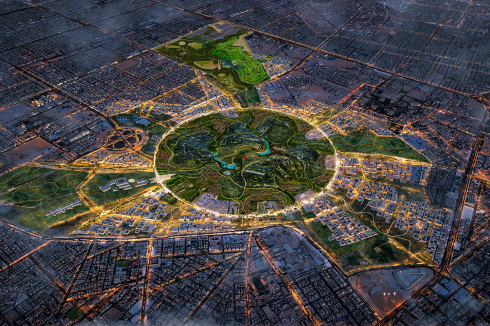
Construction projects such as King Salman Park are intended to help transform the Saudi economy
Text: Christian Brensing
Behind all of the numerous gigantic projects in Saudi Arabia one finds the so-called PIF, the Public Investment Fund, which are sovereign wealth funds. The Saudi administration created it to finance and manage these enormous projects. According to Wikipedia the total estimated assets are US$ 925 billion, which makes the Saudi PIF one of largest sovereign wealth funds in the world. Crown Prince Mohammed bin Salman is the chairman. The purpose of the PIF is, as explained on the website
www.pif.gov.sa, defined in direct relation to the giga-projects: „The giga-projects are designed to stimulate the economy and their benefits are expected to expand significantly beyond the real estate and infrastructure sectors, helping to diversify the economy away from oil, especially given their sheer scale.”
Originally established in 1971 the Public Investment Fund was relaunched in 2015. From then onwards it has gained ever greater autonomy and a new purposeful direction as a key driver for Vision 2030, “achieving positive, sustainable economic and social change”, as it is claimed. However, not only the Saudi revenues from the oil and gas business but also increasingly the attraction of international investment is paramount for the successful operation of the Fund. Therefore, one notices a remarkable presence of PIF under the banner of Invest Saudi at the real estate fairs such as Mipim and Expo Real. For example, the King Salman Park was proudly presented as an investment opportunity of the highest order at the Saudi Invest pavilion at this year’s Mipim. Thus the character of each PIF project is the sheer size and spectacular dimensions of the operation; the enabling force on a hitherto neglected or remote area or site; a high diversity of architectural and infrastructural design and finally, the aspiration of being a world-class project.
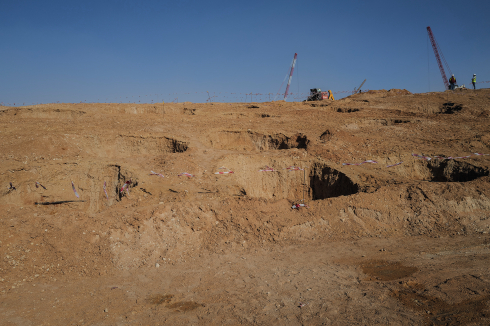
Taking these items into consideration Riyadh’s King Salman Park is an exemplary PIF project. What used to be the area of Riyadh’s first airfield is presently turned by a workforce of 20.000 in 24/7 shifts into the worldwide largest urban landscape park of 16.6 km². Though the word “park” is only a synonym for a clever commercial use of urban land going way beyond the aspects of nature. Hence the King Salman Park cannot be directly compared with the European tradition of public parks, like Berlin’s Tiergarten, London’s Hyde Park or New York’s Central Park. In the future Riyadh’s most lucrative urban living quarters will border directly onto King Salman Park. So-called “finger-parks” will delve deep into these neighbourhoods. Furthermore, the park’s circular centre will be populated by museums, restaurants as well as shopping and leisure facilities. All of them will bestow a completely new spectrum of public activities to any conservative understanding of a park.
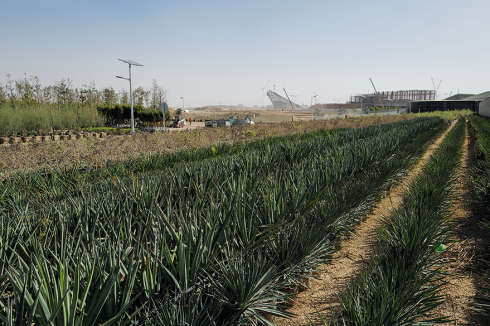
We will have to wait and see to what degree nature, i.e. the newly planted 1 million trees, shrubs and plants, will play a significant part in this extraordinary urban orchestration. Not surprisingly the client sums King Salman Park up as a „holistic experience“. The efforts to achieve all this are considerable: the soil has been exchanged and enriched up to a depth of 2.5 meters so that the roots do not reach the salty bedrock. Huge underground cisterns, so-called „attenuation tanks“, collect and store the ever so precious greywater for irrigation in a climate that can reach extreme temperatures of 45-50 °C, has a minimal air humidity of only 12% and cannot boast of any significant rainfall. Despite plants from related climatic zone all over the world have been brought to Riyadh to acclimatize in special green houses and plantations.
Since 2019 a planning team - called GSBH Joint Venture - consisting of Gerber International (Berlin/Riyadh), Buro Happold (Bath/Berlin/Riyadh) and Setec (Paris) have been commissioned to realize the masterplan by the Saudi company Omrania and Henning Larsen who had initially won the international competition. Moreover, the US-American landscape architect Michael Van Valkenburgh Associates (MVVA) has been commissioned by the GSBH to design the landscaping. However, GSBH is responsible for a whole array of buildings such as the Museum of the Earth, shading arcades, kiosks and the multi-functional so-called Parking-Hubs (including restaurants, shops and underground car parking) which will constitute the entrance gates. Additionally to this wide spectrum of architecture and landscaping several more world renowned architects are responsible, for example, for the Royal Arts Complex (Ricardo Bofill, Barcelona), the Great Mosque (Mangera Yvars Architects, London/Barcelona) or the Visitors Pavilion (David Adjaye Architects, London).
The King Salman Park is an exemplary example of a PIF project. But it is by far not the only one in Riyadh. The 135 km long Sports Boulevard, cutting right through the capital’s urban fabric from west to east, will redefine Riyadh’s landscape just as the futuristic quarter New Murabba including its iconic 400 x 400 x 400 m Mukaab Building. Finally, the historical redefinition of Diriyah as the birthplace of the present Kingdom of Saudi Arabia, is yet another example of a PIF.